Login
Log in if you have an account
Register
By creating an account with our store, you will be able to move through the checkout process faster, store multiple addresses, view and track your orders in your account, and more.
Create an accountCrystalline Quartz and Polycrystalline Quartz: Two Types of Quartz
Crystalline Quartz and Polycrystalline Quartz: Two Types of Quartz
IN SHORT
Quartz is present on almost every continent. It’s a mineral family made up of two main types: crystalline quartz and polycrystalline quartz.
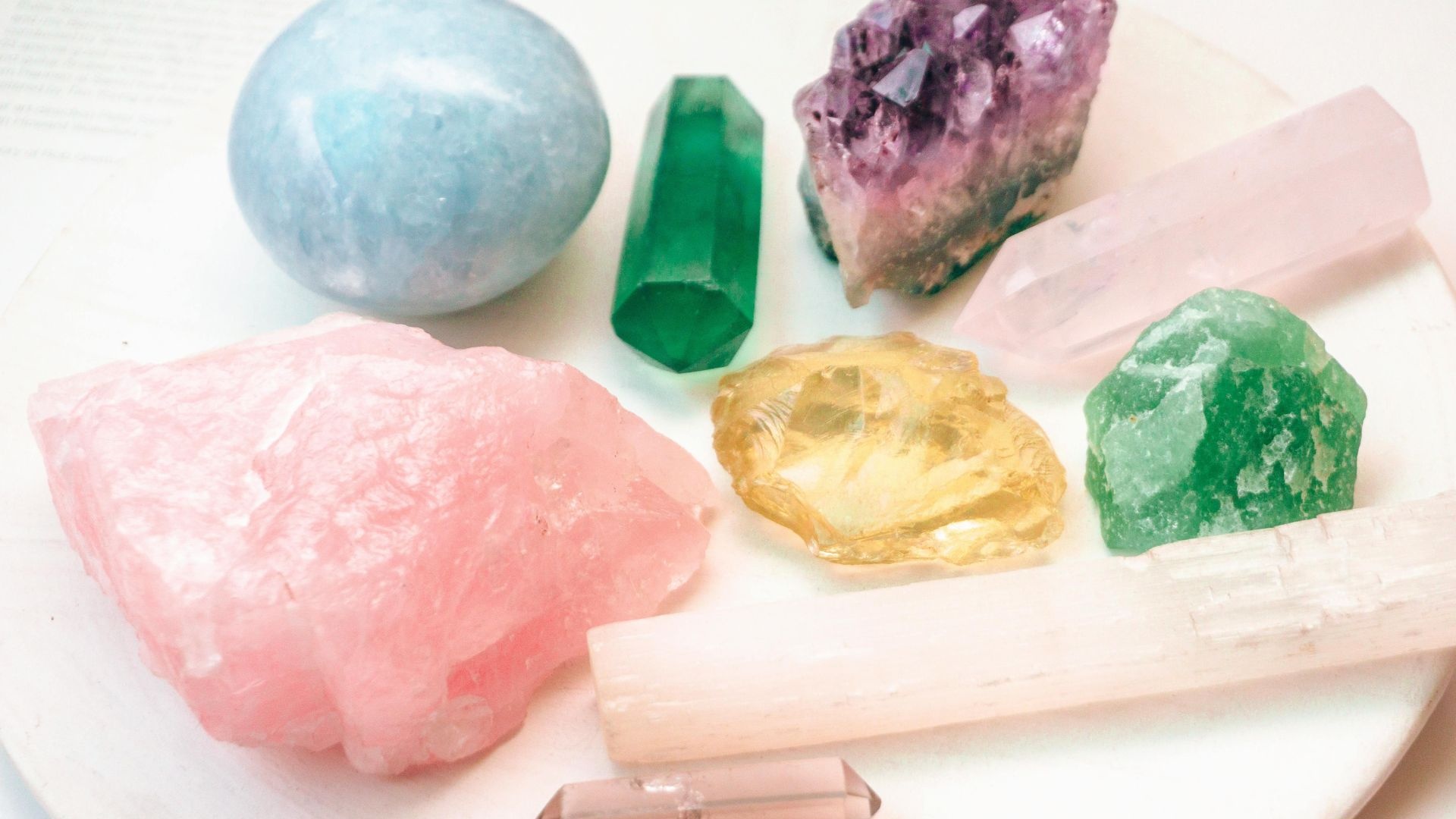
- Crystalline quartz includes the following: Clear quartz, amethyst, citrine, rose quartz, but there are many others, such as smoky quartz, ametrine, and prasiolite.
- Polycrystalline quartz includes the following: Chalcedony, jasper, carnelian, chrysoprase, and agate.
All varieties of quartz have silicium dioxide as their chemical base.
_______________
Quartz is one of the most common minerals in the Earth’s crust. You can find it in many rock types and on almost all continents on the planet. It’s composed of silicium dioxide, a natural combination of silica and oxygen.
Its crystal system is rhombohedral (or trigonal) and it has a hardness of 7 to 7.5 on the Mohs scale.[1] This mineral family is made up of two main types: crystalline quartz and polycrystalline quartz.
Crystalline Quartz
Clear quartz
Crystalline quartz features visible crystals. This type includes clear quartz, among other varieties. Also known as rock crystal, it takes its name from the word krystallos, which is Greek for “ice.” Ancient Greeks believed quartz to be a form of eternal ice frozen by the gods. This stone has been used over the centuries to make jewels, talismans, decorative objects, and even some scientific instruments. In its purest form, it’s completely colourless and transparent.
In lithotherapy, clear quartz can help foster mental clarity and concentration. It can help us be more intuitive and attentive to what guides us. It also helps us harmonize the energies around us and amplify the benefits of nearby crystals.
In nature, clear quartz is one of many varieties of quartz. The colour differences mainly come from mineral inclusions or traces of other elements that were present when the crystal was growing.

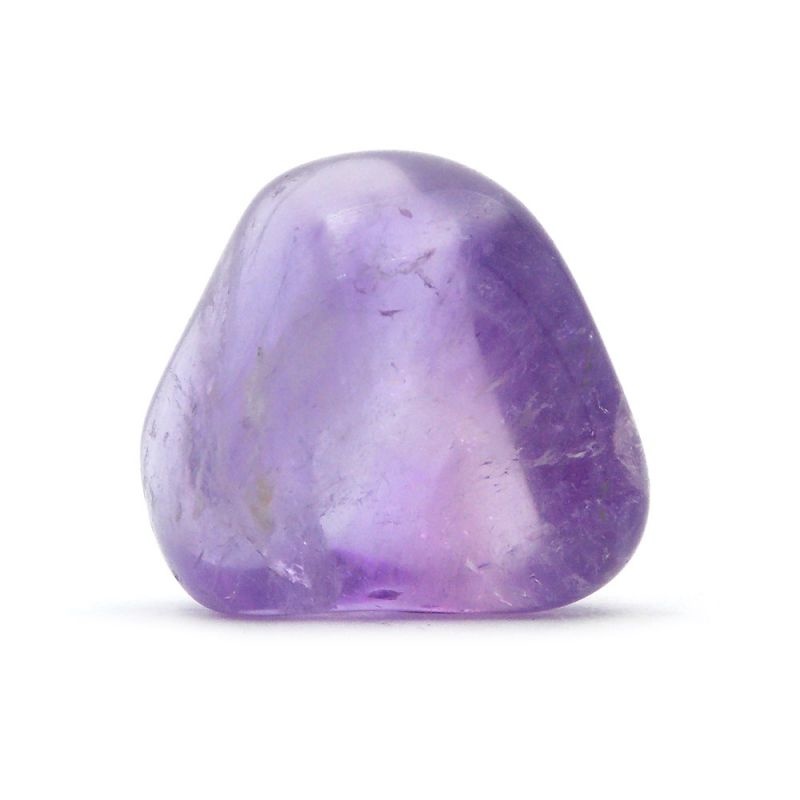
Amethyst
Amethyst is recognizable by its purple colour. This hue is due to the trace amounts of iron that were incorporated into the quartz’s crystal lattice and the natural irradiation present in surrounding rocks over millions of years.
It’s often used to calm anxiety and promote restful sleep. It also contributes to psychological protection and the opening of the crown chakra.
Citrine
Citrine is a variety of yellow quartz. When it forms naturally, its hues vary from golden to brown. However, the most common type of citrine on the market is heat-treated citrine. It’s actually made by baking amethyst in a laboratory to transform its violet colour into a dazzling yellow.
It’s a stone associated with abundance, prosperity, and success. It promotes optimism and self-esteem thanks to its positive, joyful solar vibration.

Rose quartz
For a long time, mineralogists believed that the colour of rose quartz came from trace amounts of iron, titanium, or manganese. However, modern studies have shown that the colour is sometimes due to microscopic inclusions of silicate fibres.
As a stone associated with unconditional love, starting with self-love, rose quartz helps us heal our wounds and rebuild our confidence. This variety of quartz promotes empathy, kindness, and gentleness.

Quartz and Lithotherapy
Clear quartz, amethyst, citrine, and rose quartz are frequently used in lithotherapy, but there are many other varieties of crystalline quartz, including smoky quartz, ametrine, and prasiolite. Sometimes, you can also find quartz with beautiful solid inclusions, like tourmaline, rutile quartz, shaman quartz, and phantom quartz.
Polycrystalline Quartz
But that’s not all. Did you know that chalcedony and jasper also belong to the quartz family? They are made of a huge number of overlapping microscopic crystals. Because of this, they are also known as polycrystalline quartz.
The term chalcedony is used to describe quartz with a very fine grain, that is, cryptocrystalline quartz. The chalcedony family is divided according to colour and pattern. For example, carnelian is the red-brown-orange variety, while chrysoprase is clear green chalcedony. Agates are often characterized by coloured bands.
Jasper is also a variety of cryptocrystalline quartz, but it’s generally more opaque than chalcedony.
Quartz is one of the largest and most fascinating families in the mineral world. All quartz, from amethyst to quartz with inclusions, have the same chemical base, silicon dioxide.
Do You Want to Learn More?
If you’re fascinated by quartz and other fine stones, come discover them in-store or check out our website and do your purchases directly online. Pierres D’Ailleurs has a team of specialists who are highly knowledgeable about lithotherapy and recognized across Quebec and around the world for their expertise.
[1] The Mohs scale was invented in 1812 by Friedrich Mohs, a German geologist. It’s a 1 to 10 ranking system that measures the hardness of minerals.
Recent articles
View all
The History and Origins of Halloween
Discover the Benefits of Lithotherapy Workshops